
Demolishing a house in Brisbane, whether to rebuild or to clear an old building you no longer want, is a big step. If you plan to rebuild on the same site, there’s a fair bit to think through first: services, council rules, heritage, vegetation, flooding, drainage, noise and more. It can feel overwhelming, and it’s hard to know what you can and can’t do.
Here are the things worth checking before you book anyone.

Council and Their Rules and Regulations
Before you pick up the sledgehammer, pick up the phone. Check your property on City Plan online, and talk to your building certifier or to council about what you plan to do. Here is what to check:
- Heritage and character. Some homes need planning approval to demolish because of their age or heritage value. Does yours? See what homeowners need to know about heritage and Queenslander house demolitions.
- Trees and vegetation. Will any trees need to come out for the demolition or the new build? Are they protected, and are they yours?
- Noise and working hours. Building work that neighbours can clearly hear is only allowed from 6:30 am to 6:30 pm, Monday to Saturday. How many trucks can wait in your street at once?
- Dust and runoff. How will dust be controlled, and can runoff be contained if it rains?
- Bushfire and wildlife overlays. Are you in a bushfire zone with special requirements for clearing and access? Does a wildlife habitat or corridor overlay affect your plans?
- Approval for the new house. If you are rebuilding, do you have building approval for the new home? It’s usually best to have it organised before you demolish.
Asbestos
Many Brisbane homes built before 1990 contain asbestos, in materials such as roofing, wall sheeting, eaves, flooring and pipe lagging. It has to be identified before demolition. Under sections 452 and 453 of the Work Health and Safety Regulation 2011, asbestos likely to be disturbed must be removed first, as far as is reasonably practicable. A licensed removalist is needed for any friable asbestos and for more than 10 square metres of bonded asbestos.
If you’re not sure what’s in your house, get it inspected and tested before you ask for quotes, so the quotes reflect what’s actually there. Asbestos can add to both the cost and the time, so it pays to know early. See how asbestos is identified before demolition and our asbestos removal service.
Site Access and Size
Check with your contractor how they need to access the property. Will you need a footpath permit for trucks to enter and exit? Is your block down an easement? Is the house in the far corner of a large block? Is there enough room on site for the excavator and a truck? See what site access is required for house demolition projects.
Demolition Quotes
Quotes can vary widely, so get a few and compare what each one includes. If a price looks too good to be true, check what has been left out. The differences often come down to whether the demolition is mechanical, by hand or a mix of both. If you want to salvage windows, steps or posts for your new home, that can add to the demolition cost but may reduce your rebuild bill. Check with both your demolition and building companies about costs and requirements before you start.
Asbestos can add to the price and the time, so ask each contractor whether their quote includes testing and removal. Our guides cover how to compare quotes from demolition companies in Brisbane and how house demolition is priced in Brisbane.
Drainage and Flood Zones
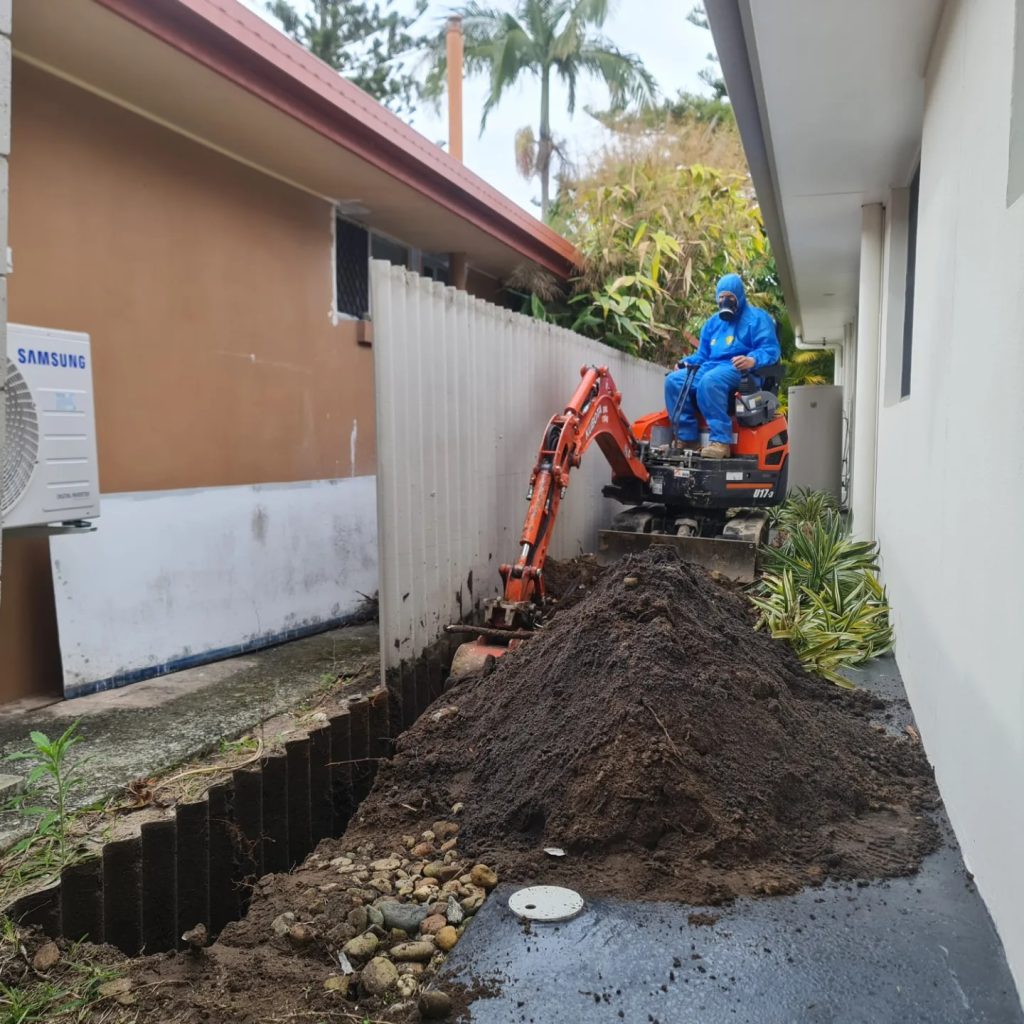
Do you know if you’re in a flood zone? It affects what you can rebuild on the block, so it’s worth knowing before you start. Council’s free FloodWise Property Report shows flood information for your address. If your property floods or has drainage problems, you may also need a hydraulic report, so find out early.
Disconnections
Before demolition can start, services need to be disconnected: water, sewerage, power, NBN, gas and anything else connected to your property. You can ask Urban Utilities, the water and sewerage provider, about the connections to your property, so a missed service doesn’t hold up the job after it has started. See which services you should disconnect before demolition.
Your Swimming Pool
Remember to include your current or proposed pool in the plans you give the demolisher and the builder. They need to know it’s there, or going to be there, to quote you properly and prepare the ground.
Find Alternative Accommodation
You’ll need somewhere to live as soon as the site is handed over to the demolisher. Rentals can be hard to find, and relatives hard to live with, so think about this early. Choose accommodation with some flexibility, so a weather delay or an unexpected issue doesn’t leave you without a place to stay.
You’ll also need somewhere for your possessions if you can’t take them with you. A local storage facility is usually a good idea.
Neighbours
Tell your neighbours your plans as soon as you have something concrete to tell them. If they’ve planned a backyard wedding for the day you start the demolition, things could go pear-shaped for everyone. Give them your number and your contractor’s number, so they know who to contact if they have concerns. See how demolition companies protect neighbouring homes and businesses.

Pests
Before demolition starts, arrange pest control for rats, possums and termites, so they don’t move to neighbouring properties once their home is gone. The neighbours won’t thank you for unwelcome visitors on their doorstep.
Planning a House Demolition in Brisbane
There are lots of things to consider before you demolish a house, from council rules and asbestos to access, services, neighbours and where you will live. If you’re in any doubt about the process, or you’re looking for a quote, contact the Next Gen Demolition team.