
Bridge demolition in Brisbane requires specialised techniques, equipment, and expertise that go far beyond standard building demolition. Whether you’re dealing with an ageing pedestrian bridge, an infrastructure upgrade, or a decommissioned vehicular bridge, understanding these differences is essential.
Brisbane’s growing infrastructure demands mean more bridges need replacing or removing. The process involves unique challenges that standard demolition contractors are not equipped to handle.
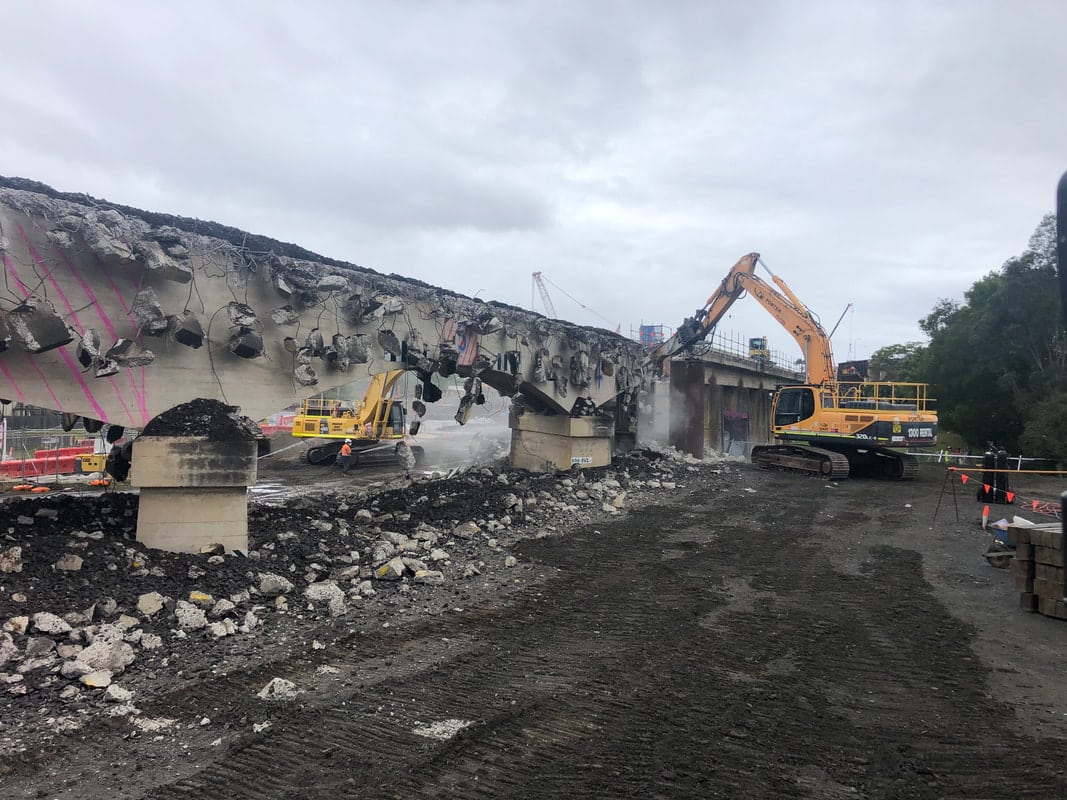
Structural Complexity and Load-Bearing Considerations
Bridges carry entirely different structural loads than buildings. They’re designed to support constant dynamic forces from traffic, pedestrians, and environmental factors like wind and Brisbane’s rainfall and flood events.
Standard building demolition typically works from the top down. Bridge demolition requires careful analysis of support systems, tension cables, and load distribution before any work begins. One engineering error can cause uncontrolled collapse or damage to surrounding infrastructure.
Support structures matter more
Bridges rely on piers, abutments, and foundations that may sit deep in waterways or ground conditions. Removing them requires specialised cutting equipment, underwater works, or heavy lifting systems that standard demolition machinery cannot perform.
Environmental and Waterway Protection Requirements
Many Brisbane bridges cross waterways, creeks, or flood-prone areas. This creates environmental obligations that do not exist in standard building demolition.
Projects may require silt curtains, water quality monitoring, and sediment control. Any contamination of waterways can lead to penalties under Queensland environmental legislation.
Standard demolition sites typically don’t deal with aquatic ecosystems, fish habitats, or water flow management. Bridge projects must account for all of these while maintaining environmental compliance.
Specialised Equipment and Access Challenges
Bridge demolition requires equipment that can work in confined spaces, over water, and from underneath the structure. Standard excavators or wrecking balls are not suitable.
Projects may require cranes with extended reach, barges, saw-cutting systems, and lifting gear for reinforced concrete and steel components. Access limitations mean machinery cannot always be placed directly beside the structure.
Traffic management adds complexity
If the bridge still carries traffic or sits above active roads, demolition must be staged around live infrastructure. This requires closures, diversions, and coordination with Brisbane City Council and the Department of Transport and Main Roads.
Material Composition and Disposal Differences
Bridges contain materials designed for long-term stress and exposure. Prestressed or post-tensioned concrete includes high-strength steel cables that must be released carefully during demolition.
Older bridges may also include creosote-treated timber or coatings that require specific disposal processes. Concrete and steel can often be recycled, though some components require separation or treatment before processing.
Regulatory Approvals and Compliance Standards
Bridge demolition in Brisbane involves multiple layers of approval. Projects may require permits from Brisbane City Council, Transport and Main Roads, and state environmental regulators where waterways or contamination risks are involved.
Standard building demolition typically requires local approval only. Bridge work may also require traffic impact assessments, environmental management plans, and coordination with emergency services.
Heritage assessments may apply if the bridge has cultural or historical significance.
Safety Protocols and Risk Management
Bridge demolition presents additional hazards compared to standard demolition. Workers often operate at height, over water, or near live traffic. Fall protection, water rescue planning, and exclusion zones are critical.
Bridge work adds drowning risks, vehicle strike hazards, and the potential for debris falling into waterways or roads below.
Vibration monitoring becomes critical
Bridge demolition can create vibrations that affect nearby roads, rock foundations, and underground infrastructure. Continuous monitoring is often required.
Why Professional Bridge Demolition Expertise Matters in Brisbane
Bridge demolition is a specialised discipline requiring engineering knowledge, unique equipment, and regulatory experience. Attempting bridge removal with standard demolition methods creates serious safety risks and potential environmental breaches.
Next Gen Demolition provides specialised bridge demolition services across Brisbane, handling engineering analysis, environmental controls, and full regulatory compliance. Contact us for expert assistance with bridge demolition.