
Weather is one of the most underestimated factors in demolition projects. While demolition itself may seem straightforward, conditions such as rain, wind, and ground moisture can significantly affect how and when work is carried out.
In Brisbane and the Gold Coast, weather patterns can be unpredictable, particularly during wetter months and coastal weather shifts that directly affect site conditions. Understanding how weather impacts demolition will help you plan more effectively, set realistic timelines, and avoid unnecessary delays.
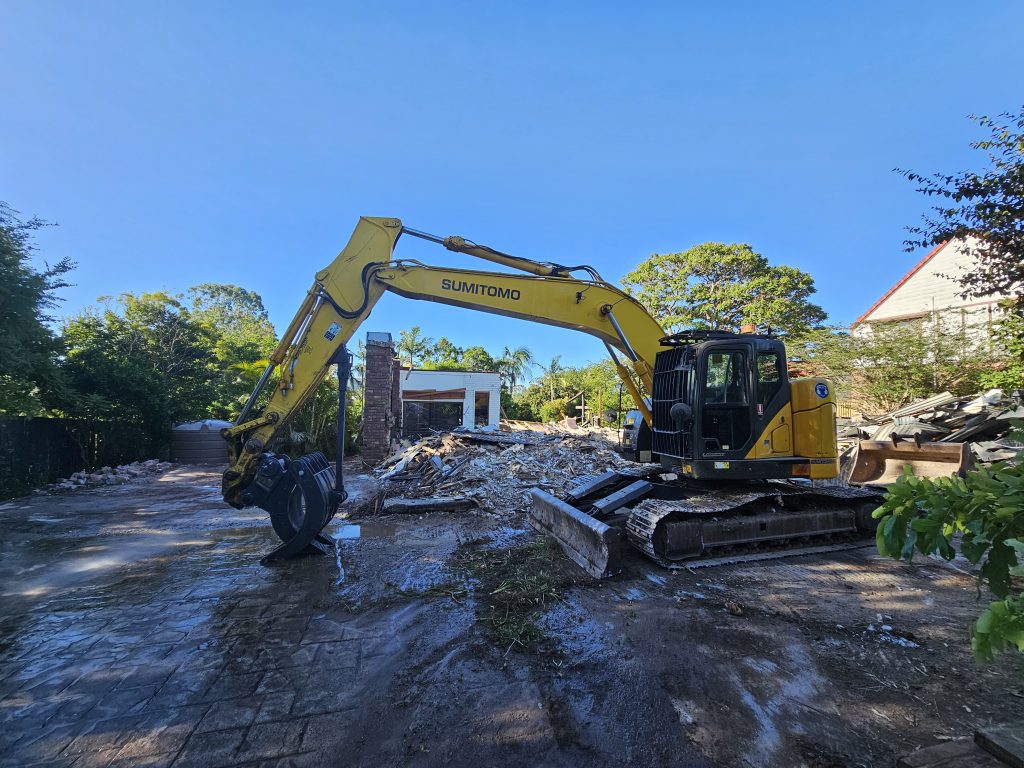
Why Weather Matters More Than Most People Expect
Demolition is not just about removing a structure. It involves heavy machinery, site movement, material handling, and strict safety controls. All of these are influenced by environmental conditions. Poor weather can affect:
- Ground stability and machinery access
- Visibility and safe operation of equipment
- Control of dust and debris
- Overall site safety
When conditions are not suitable, work often cannot proceed safely. This means even short periods of poor weather can delay progress, particularly if they occur at critical stages of the demolition process.
How Rain Affects Demolition Projects
Rain is one of the most common causes of disruption. While light rain may not stop work entirely, sustained or heavy rainfall can significantly impact site conditions.
Wet weather softens the ground, which affects how machinery operates. Excavators and trucks rely on stable surfaces, and when the ground becomes saturated, there is a higher risk of equipment becoming unstable or stuck. This can bring work to a complete stop until conditions improve.
This is particularly common across Brisbane sites with clay-based soil, where water retention can quickly impact access and stability. Even a short period of rain can change how the site behaves under load.
Rain can also limit access to the site, particularly on sloped blocks or properties with unsealed ground. Even if demolition has started, materials may not be able to be removed efficiently, which slows the entire process.
The Impact of Ground Conditions After Rain
One of the most overlooked factors is what happens after the rain has stopped. Even when the weather clears, the site may not be ready to resume work. Ground conditions may remain:
- Soft and unstable under machinery
- Difficult to access without causing damage to the site
- Unsafe for certain demolition activities
This often leads to delays that extend beyond the actual rainfall. In some cases, work may need to be paused for several days to allow the ground to dry and stabilise, particularly on sites with poor drainage or heavy soil.
How Wind Can Affect Demolition Safety
Wind is another important factor, especially when structures are partially dismantled. At this stage, buildings can be more vulnerable, and control becomes more critical. High winds can:
- Make it difficult to control falling materials
- Increase the risk of debris spreading beyond the site
- Affect the safe operation of machinery
In built-up areas, this creates additional risk for neighbouring properties. For this reason, demolition may need to be paused during strong winds to maintain safety.
Dust Control and Dry Conditions
While wet weather creates delays, very dry conditions present a different set of challenges. Dust control becomes a key concern, particularly in residential areas. During dry weather:
- Dust can spread beyond the site and impact neighbouring properties
- Visibility may be reduced for operators
- Additional measures are required to manage airborne particles
Contractors typically use water suppression to control dust, but this needs to be carefully managed. Overuse of water can create muddy conditions, which then affects access and ground stability. Balancing these factors is an important part of managing the site effectively.
Coastal Conditions and Weather Factors on the Gold Coast
On the Gold Coast, weather-related challenges are often amplified by coastal conditions. These factors can influence both demolition and site preparation in ways that are not always obvious at the planning stage. Common site conditions include:
- Sandy soil that shifts more easily when wet
- Higher moisture levels in the ground
- Stronger and more consistent winds
- Drainage challenges in low-lying areas
These conditions can affect how machinery operates and how quickly a site can recover after rain. Contractors with local experience will factor this into their planning and adjust the demolition approach accordingly.
How Weather Affects Project Timelines
Weather-related delays are one of the biggest variables in demolition projects. While contractors can estimate timelines, conditions outside their control can impact progress. Even short disruptions can affect:
- Scheduling of machinery and labour
- Coordination of waste removal
- Timing of the next stage of construction
This is why it is important to build flexibility into your project schedule. Planning construction to begin immediately after demolition can create pressure if delays occur.
Common Mistakes When Planning Around Weather
Many delays are not caused by weather itself, but by how it is planned for. Common mistakes include:
- Scheduling demolition during wet periods without allowing flexibility
- Assuming work can continue regardless of conditions
- Not allowing time for sites to dry after rain
- Failing to consider how weather affects access and ground stability
These issues often lead to rushed decisions or project interruptions that could have been avoided with better planning.
How to Plan for Weather-Related Delays
While weather cannot be controlled, it can be accounted for in your planning. A realistic approach helps reduce disruption and keeps your project moving forward. This involves:
- Scheduling demolition with seasonal conditions in mind
- Allowing buffer time between demolition and construction
- Ensuring drainage and site preparation are addressed early
- Working with a contractor who understands local weather patterns
This level of planning does not eliminate delays, but it significantly reduces their impact.
Keep Your Demolition Project on Track
Weather will always play a role in demolition, but it does not have to derail your project. Understanding how conditions affect the site and planning accordingly allows you to manage expectations and avoid unnecessary setbacks.
For projects in Brisbane and the Gold Coast, Next Gen Demolition considers weather, site conditions, and timing as part of the planning process, helping ensure your demolition is completed as efficiently and safely as possible.