
When people think about demolition, they often picture excavators bringing down a building and trucks removing the debris. In reality, the demolition itself is only one part of the project. A professional demolition contractor manages a series of carefully planned stages before, during and after the structure is removed.
Understanding what is included in a full-service demolition will help you compare quotes more accurately, avoid unexpected costs, and ensure your site is properly prepared for whatever comes next. Whether you’re planning a house demolition in Brisbane or a larger commercial redevelopment, knowing what should be included gives you confidence that nothing important has been overlooked.
Planning the Demolition Project Before Work Begins
A successful demolition starts well before machinery arrives on site. The planning stage allows potential issues to be identified early so they don’t become costly delays once work is underway.
This typically begins with a detailed inspection of the property, assessing factors such as the condition of the structure, surrounding buildings, site access, underground services and any hazards that may affect the demolition method.
The contractor will also review the proposed redevelopment to understand what the site needs to look like once demolition is complete. For example, a knockdown rebuild may require a different level of site preparation than a property being cleared for future sale.
Investing time in planning helps reduce unexpected issues during demolition and allows the project to proceed more safely and efficiently.
Approvals, Permits and Regulatory Requirements
Before demolition can begin, the appropriate approvals and documentation need to be in place. The exact requirements depend on the type of property, its location and the scope of the project.
A full-service demolition contractor will generally manage this process on your behalf, helping coordinate the required permits and ensuring work complies with Queensland regulations and local council requirements.
This stage is sometimes underestimated, but delays in approvals can affect the entire construction schedule. If demolition is only one part of a larger development, every day lost at the beginning can have a flow-on effect for builders, trades and project timelines.
Asbestos and Hazardous Material Removal
One of the most important stages of demolition is identifying and safely removing hazardous materials before structural demolition begins.
Many Brisbane homes built before the late 1980s contain asbestos in products such as wall sheeting, eaves, roofing materials or flooring. Commercial buildings may also contain hazardous materials that require specialist handling.
If asbestos is identified, it must be removed by licensed professionals before demolition proceeds. This protects workers, neighbouring properties and the wider community from airborne fibres while ensuring the project complies with Queensland safety legislation.
A comprehensive demolition quote should clearly explain how asbestos inspections, removal and disposal will be managed if required. If these items are unclear or excluded, it is worth asking questions before committing to the project.
Service Disconnections and Site Preparation
Before demolition begins, all services connected to the property need to be safely disconnected. This includes electricity, water, gas and telecommunications.
While this may seem like a straightforward administrative task, it is an important safety requirement. Attempting demolition before services have been properly disconnected can place workers, neighbouring properties and public infrastructure at risk.
Site preparation may also include installing temporary fencing, identifying safe access points for machinery, establishing traffic management where required, and implementing dust or erosion controls. These measures help ensure demolition can proceed safely while minimising disruption to surrounding properties.
The Demolition Process
Once planning and preparation are complete, the demolition itself can begin.
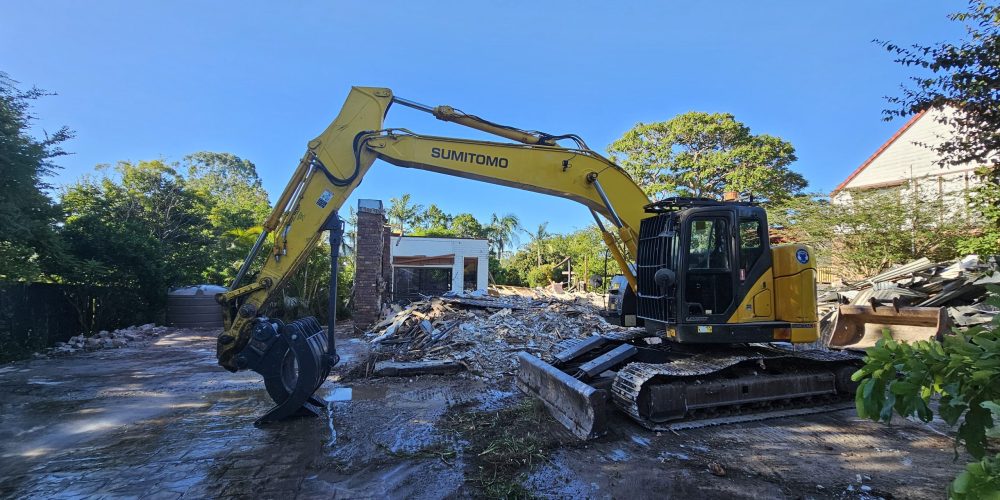
The equipment used will depend on the type of structure, available site access and surrounding environment. Residential demolitions may involve excavators fitted with specialised attachments that allow controlled removal of the building, while commercial projects often require larger machinery or staged demolition methods.
The focus is not simply on bringing the structure down quickly. Professional demolition involves carefully controlling how the building is dismantled to protect neighbouring properties, underground infrastructure and workers on site.
For commercial projects, demolition may also include internal strip-outs before structural demolition begins. Removing non-structural elements first often improves safety and allows recyclable materials to be separated more effectively.
Waste Removal, Recycling and Responsible Disposal
Removing the building is only part of the job. Once demolition is complete, the site needs to be cleared of all waste and prepared for the next stage of development.
Materials are typically sorted so recyclable products such as concrete, steel and some timber can be recovered wherever practical. Recycling reduces landfill and supports more sustainable construction practices.
The contractor should also ensure hazardous materials have been disposed of correctly and provide any documentation required for regulated waste.
A professional demolition project should conclude with a site that is clean, safe and ready for further preparation or construction.
Final Site Preparation and Handover
One area that is often overlooked when comparing demolition companies is what happens after the waste has been removed.
Depending on the scope of works, a full-service demolition may also include removing old footings, slabs, underground structures or redundant services, along with basic site levelling and preparation for the builder.
A properly prepared site allows the next stage of the project to commence with minimal delays. If demolition finishes but additional clearing or remediation is still required, construction timelines can quickly begin to slip.
Understanding exactly what condition the site will be left in is one of the most important questions to ask before accepting a demolition quote.
Why a Full-Service Demolition Often Provides Better Value
When comparing demolition quotes, it is tempting to focus on price alone. However, lower quotes sometimes exclude important services that need to be arranged separately.
These exclusions might include asbestos removal, permit coordination, waste disposal, site preparation or final clean-up. While the initial quote may appear cheaper, organising these services independently often increases the overall project cost and creates additional coordination for the property owner.
A full-service demolition provides a single point of responsibility, helping ensure each stage is completed in the correct order and reducing the likelihood of delays or unexpected costs.
Setting Your Project Up for Success
A successful demolition is about much more than removing a building. Careful planning, regulatory compliance, safe work practices and thorough site preparation all contribute to a smoother construction project and a better overall outcome.
Whether you’re planning a residential knockdown rebuild or a commercial redevelopment, working with an experienced contractor helps ensure every stage is managed professionally from planning through to final site handover.
Next Gen Demolition provides complete demolition services across Brisbane and the Gold Coast, managing everything from approvals and asbestos removal through to demolition, waste removal and site preparation, giving clients confidence that their project is ready for the next stage.